
πŸ“ˆ Economy & Investment

Dholera economy: India's most ambitious smart city, investment powerhouse & the future of Gujarat

Dholera is not simply a destination on a map; it is an economic statement. As India's first and largest planned greenfield smart city under the Delhi-Mumbai Industrial Corridor, the Dholera Special Investment Region represents one of the most consequential urban and industrial development projects the country has undertaken. This page explains the Dholera economy in accessible detail β€” covering the SIR framework, key industries, infrastructure milestones, investment scale, and what all of this means for travelers, observers, and anyone seeking to understand why Dholera is increasingly central to the story of modern India.

0 kmΒ² Planned Area
β‚Ή1L+Cr Projected Investment
8L+ Jobs Potential
β‚Ή91K Cr Tata Semiconductor Fab
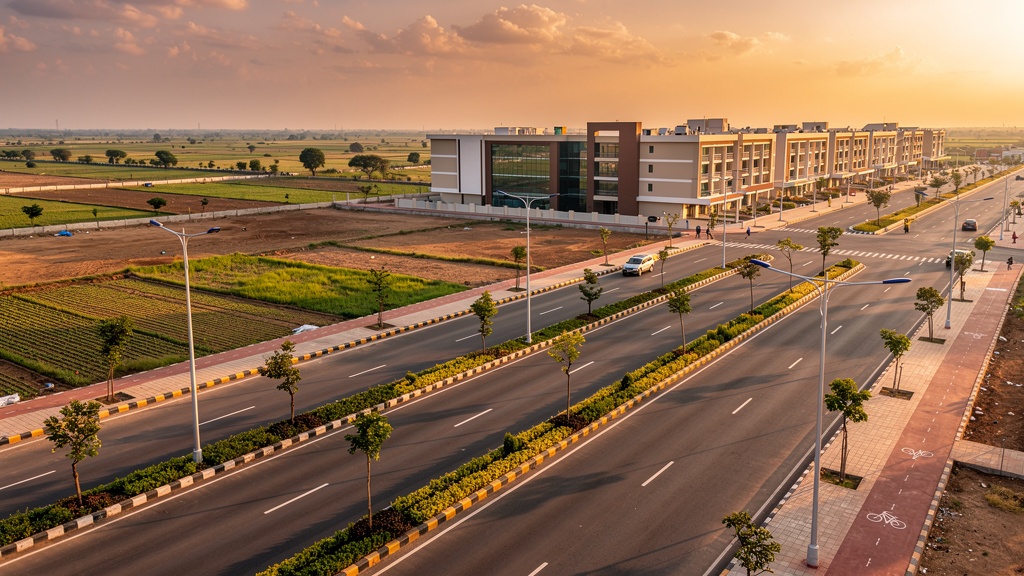
Wide view of Dholera region in Gujarat showing open land and infrastructure development
The scale of Dholera SIR becomes visible in the landscape β€” wide roads, planned zones, and open horizons that signal a city still being written.
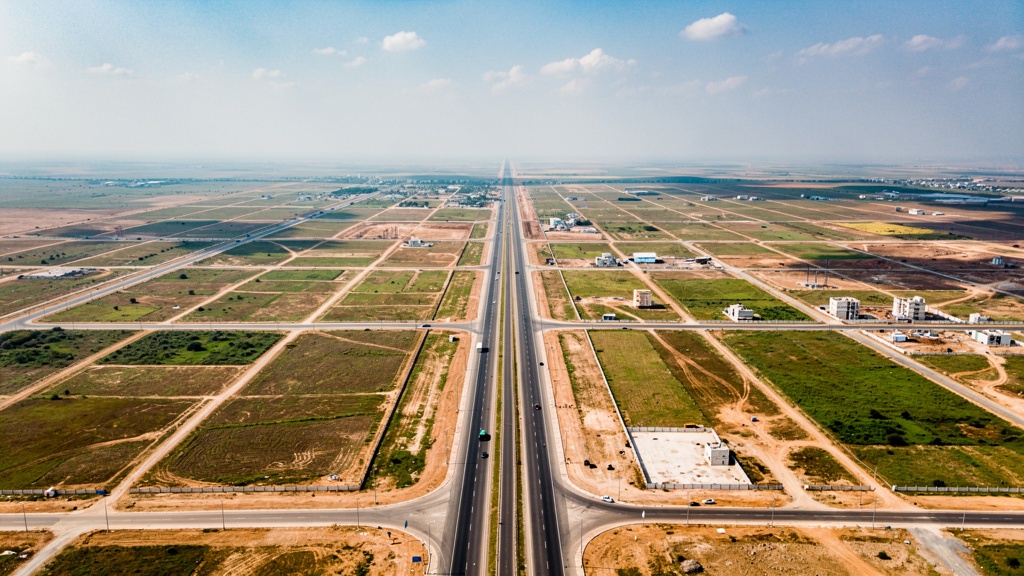
Aerial perspective of Dholera Gujarat showing planned road network and development zones
Dholera's economic zones are laid out with the clarity of a new chapter β€” logistics, manufacturing, and residential areas designed for the long term.

What is the Dholera Special Investment Region?

The Dholera Special Investment Region, commonly known as Dholera SIR, is a planned urban and industrial megacity located in the Ahmedabad district of Gujarat, India. Spread across approximately 920 square kilometres, it is being developed as a self-sustaining city with dedicated industrial zones, residential sectors, commercial areas, public amenities, and world-class utility infrastructure. When fully developed, Dholera SIR is projected to house a population of over two million residents and support more than eight lakh direct and indirect jobs.

The SIR was established under the Gujarat Special Investment Region Act of 2009, a pioneering piece of legislation that allowed Gujarat to create legally designated zones with streamlined governance, land acquisition, infrastructure provisioning, and single-window clearance for investors. This legal framework gave Dholera a significant competitive advantage over other planned cities in India, attracting attention from domestic conglomerates and international corporations interested in building manufacturing and logistics capacity in the western Indian market.

What makes Dholera especially significant is that it is not a satellite city or an extension of an existing urban area. It is a greenfield city β€” built from scratch on previously underdeveloped land β€” which means that every element of its physical layout, utility network, transport system, and public space has been designed intentionally for the requirements of twenty-first century industry and urban life. This clean-slate approach gives Dholera infrastructure capabilities that older Indian cities struggle to retrofit.

Governance and development authority

Dholera SIR is administered by the Dholera Industrial City Development Limited (DICDL), a special purpose vehicle jointly held by the Government of India and the Government of Gujarat. DICDL is responsible for master planning, trunk infrastructure development, investor facilitation, and land allotment. The involvement of the central government through its National Industrial Corridor Development Corporation (NICDC) ensures that Dholera remains a national priority project with sustained funding and policy support.

This governance structure also reassures investors. The dual state-centre model reduces dependence on any single political administration and provides structural continuity for long-term capital deployment. For businesses evaluating India-wide location options, the Dholera governance model compares favorably with less institutionalized alternatives.

Key fact: Dholera SIR covers approximately 920 kmΒ² β€” nearly double the size of Mumbai island β€” making it one of the largest planned urban development projects in the world.

Dholera and the Delhi-Mumbai Industrial Corridor

Dholera's economic ambition is inseparable from the Delhi-Mumbai Industrial Corridor, or DMIC β€” one of the most significant infrastructure and economic planning initiatives in post-independence India. The DMIC is a multi-modal industrial corridor spanning approximately 1,500 kilometres between the national capital and India's commercial capital, passing through six states. It is designed to be a spine of industrial and logistical activity, with planned cities, ports, railways, and highways built around a high-capacity freight rail line that dramatically reduces the cost and time of goods movement.

Dholera is one of the most prominent node cities in the DMIC network and the first to enter active infrastructure development. Its location in Gujarat gives it access to the Dedicated Freight Corridor, proximity to multiple major ports including Kandla, Mundra, and Pipavav, and direct road connectivity to Ahmedabad. This combination of rail, road, and port access is extremely rare for a single location and explains why Dholera attracts industries that depend on efficient supply chains.

The DMIC also includes a powerful technology and information dimension. Smart infrastructure for power management, water recycling, telecommunications, and real-time monitoring of city systems is planned across all DMIC node cities, with Dholera being the prototype. This means the city is designed to manage its own logistics, utilities, and citizen services using integrated digital systems from the ground up.

For travelers and observers, understanding the DMIC gives context to the physical character of Dholera. The wide roads, systematically laid utilities, and carefully demarcated zones you observe during a visit are all deliberate outputs of this regional planning framework. They are not accidents of geography but the visible form of a national economic policy translated into physical infrastructure.

DMIC's role in India's manufacturing competitiveness

India's goal of becoming a global manufacturing hub depends in large part on overcoming the logistics challenges that have historically reduced its competitiveness. The DMIC addresses this through a combination of dedicated freight rail reducing truck dependency, well-connected industrial zones reducing last-mile costs, and planned port integration reducing export delays. Dholera benefits from all three layers of this strategy. The result is an industrial city that, at full development, should offer some of the lowest total logistics costs in South Asia for goods moving between the domestic market and global export channels.

Key industries and economic sectors planned for Dholera SIR

Dholera SIR is designed as a diversified economic city with multiple industry clusters that complement each other and strengthen the overall ecosystem.

πŸ’»

Electronics & Semiconductors

Home to Tata-PSMC's β‚Ή91,000 Cr chip fab β€” India's most significant semiconductor investment.

πŸš€

Defence & Aerospace

Strategic location and security infrastructure attract defence manufacturing under Make in India.

πŸ’Š

Pharmaceuticals

Dedicated pharma zones with reliable power and water treatment for global supply chains.

πŸš—

Automotive & EVs

EV assembly, battery production, and advanced engineering goods for domestic and export markets.

πŸ“¦

Logistics & Warehousing

Freight corridor access and cold-chain infrastructure reduce last-mile supply chain costs.

πŸ’»

IT & Business Services

IT parks and BPO operations complement the manufacturing base, diversifying employment.

Electronics manufacturing has emerged as the defining economic headline for Dholera. With India actively pursuing a semiconductor-independent industrial strategy, the government designated Dholera as a key site for chip fabrication and electronics component manufacturing. The announcement of the Tata Electronics-PSMC semiconductor fab β€” a β‚Ή91,000 crore investment β€” is the single largest industrial announcement in Dholera's history and signals the seriousness of the electronics manufacturing ambition. Read more in the dedicated semiconductor section below.

Defense and aerospace manufacturing

Defense manufacturing is a second major thrust area. India's push to indigenize defense equipment production under the Make in India initiative has identified Dholera as a suitable location for defense industrial corridors. The region's security infrastructure, land availability, regulatory environment, and proximity to strategic logistics routes make it attractive for both private defense contractors and public sector enterprises expanding their manufacturing footprint.

Pharmaceuticals and medical devices

Gujarat is already one of India's most important pharmaceutical manufacturing states, contributing nearly a third of national pharma output by some estimates. Dholera extends this tradition by offering dedicated pharmaceutical and medical device manufacturing zones with reliable power, water treatment, and regulatory infrastructure. International pharmaceutical companies exploring India as an alternative or complement to China-based supply chains have shown consistent interest in Dholera's pharma cluster potential.

Automotive and engineering goods

The automotive sector in Gujarat has benefited from decades of industrial investment and workforce development. Dholera adds a new node to this ecosystem by providing space for vehicle assembly, component manufacturing, EV battery production, and advanced engineering goods. The EV transition is particularly relevant, with several EV manufacturers and battery technology firms evaluating Dholera as a production hub given its renewable energy supply plans and export connectivity.

Logistics, warehousing, and cold chain

No industrial city operates without a strong logistics backbone. Dholera has dedicated logistics and warehousing zones planned around its freight corridor access points. Cold chain infrastructure for pharmaceutical, agricultural, and food product logistics is also being developed, reflecting the recognition that supply chain quality increasingly depends on temperature-controlled movement at every stage.

Information technology and business services

The residential and commercial sectors of Dholera SIR are expected to host IT parks and business process operations alongside the manufacturing base. This diversification allows Dholera to attract knowledge-sector employment in parallel with blue-collar and technical manufacturing jobs, creating a more balanced economic profile than traditional single-sector industrial towns typically achieve.

Dholera as India's emerging semiconductor hub

If there is one economic development that has most sharply elevated Dholera's profile in 2024 and 2025, it is India's semiconductor manufacturing ambition β€” and Dholera's central role in that ambition. The announcement of the Tata Electronics-PSMC semiconductor fabrication plant, representing an investment of approximately β‚Ή91,000 crore, placed Dholera at the heart of India's effort to establish a domestic chip manufacturing industry for the first time.

Semiconductors are the foundational component of all modern electronics β€” from smartphones and laptops to electric vehicles, defence systems, medical equipment, and industrial automation. India currently imports nearly all its semiconductor requirements, making the supply chain a strategic vulnerability. The government's India Semiconductor Mission, backed by a β‚Ή76,000 crore incentive scheme, is designed to change this by attracting global chip manufacturers and their supply chains to Indian locations.

Dholera has several qualities that make it particularly suitable for semiconductor fabrication. First, chip manufacturing requires an enormous and highly stable supply of electricity. Dholera's planned solar and hybrid power infrastructure addresses this. Second, fabrication plants require large, flat, well-prepared land plots with controlled environments β€” exactly what a greenfield planned city can provide. Third, semiconductor supply chains benefit from proximity to port access for raw material imports and finished product exports. Dholera's position relative to Mundra and Kandla ports satisfies this requirement.

The multiplier effect of a semiconductor fab on a regional economy is substantial. Each direct fab job typically supports between five and ten indirect jobs in construction, services, components, chemicals, and logistics. The research and development ecosystem that grows around chip manufacturing also generates higher-education institutions, technical training centers, and innovation clusters that further diversify and deepen the local economic base.

Strategic significance: A successful semiconductor cluster in Dholera would position India alongside Taiwan, South Korea, and the United States as a meaningful actor in the global chip supply chain β€” a goal with major implications for India's industrial policy, defense capability, and digital economy.

Downstream electronics ecosystem

A semiconductor fab does not operate in isolation. It attracts and requires a downstream ecosystem of printed circuit board manufacturers, device assemblers, packaging facilities, testing laboratories, specialty chemical suppliers, and precision equipment service providers. This ecosystem creates the conditions for a self-reinforcing electronics industrial cluster that deepens over time. Gujarat's existing industrial base β€” including chemical manufacturing, precision engineering, and logistics β€” provides a useful foundation for this downstream ecosystem to develop efficiently around Dholera's core fabrication capability.

Dholera International Airport and the connectivity revolution

No industrial city of Dholera's ambition can function at full capacity without direct air connectivity, and the Dholera International Airport project addresses this directly. The greenfield airport is being built to serve the Dholera SIR and the wider southern Gujarat region, providing an alternative gateway that reduces the load on Ahmedabad's Sardar Vallabhbhai Patel International Airport and dramatically shortens the travel time for executives, workers, and goods moving to and from the industrial zone.

The airport's design reflects Dholera's future-oriented character. It is being planned from scratch with cargo facilities, multi-modal integration, and the capacity to handle volumes commensurate with a major industrial and residential city. Unlike airports that were built in earlier eras and now face retrofitting challenges, Dholera International Airport will be built with twenty-first century operational standards from day one.

For travelers, the airport's eventual opening will meaningfully change the calculus for visiting Dholera. Currently, most visitors travel by road from Ahmedabad. Once the airport is operational, direct connections to major Indian cities and eventually international destinations will be possible, making Dholera accessible in ways that compound its economic and touristic relevance. The airport also serves as a powerful signal to investors: a city with its own international airport is a city with long-term commitment from government and markets alike.

Metro rail and internal connectivity

The Dholera Metro Rail project further strengthens internal and external connectivity. The metro is designed to connect Dholera SIR to Ahmedabad, providing a fast, reliable, high-capacity link that reduces road congestion, supports daily commuting for the working population, and integrates Dholera into the broader Ahmedabad metropolitan mobility system. High-speed train links to Mumbai via the under-construction Ahmedabad-Mumbai bullet train corridor add another dimension to Dholera's eventual connectivity advantage.

Together, the airport, metro, high-speed rail access, and road network create a multi-modal connectivity platform that few Indian cities of any size can match. For industries that depend on reliable, fast movement of people and goods, this connectivity picture is a decisive location advantage.

Travel outlook: When Dholera International Airport becomes operational, it will transform the destination from a road-only visit into one accessible by direct air, metro, and high-speed rail β€” radically expanding its appeal for business and leisure travelers alike.

Renewable energy and the green economy in Dholera

One of the most distinctive and strategically important aspects of Dholera's economic model is its renewable energy foundation. Unlike industrial zones that depend entirely on coal-powered grid electricity, Dholera is planned to operate with a substantial share of power from solar and hybrid renewable sources. This is not merely an environmental choice; it is a competitive one. Industries that require stable, low-cost, clean electricity β€” and this includes semiconductor fabrication, data centers, pharmaceutical manufacturing, and electric vehicle battery production β€” increasingly favor locations where green power is both available and affordable.

Gujarat is already one of India's leading states for solar energy generation, and the open, flat terrain around Dholera is particularly well-suited for large-scale solar installation. The region receives excellent solar irradiance for most of the year, and the low population density of the surrounding land removes the land-use conflicts that complicate solar development in more densely occupied areas. Large solar parks supplying both the industrial zone and the residential city are part of Dholera's long-term energy master plan.

Renewable energy supply also aligns with global supply chain requirements. Major international companies β€” particularly in the electronics, automotive, and pharmaceutical sectors β€” are under increasing pressure from their customers, investors, and home-country regulators to reduce the carbon footprint of their manufacturing. Choosing a manufacturing location with renewable energy supply helps these companies meet their sustainability targets without expensive on-site generation investments.

This green energy orientation gives Dholera a forward-looking economic identity that distinguishes it from industrial zones built in an earlier era. As carbon pricing, sustainability disclosure requirements, and green procurement policies become more prevalent globally, Dholera's clean energy infrastructure becomes an increasingly tangible economic asset rather than merely a talking point.

Energy storage and grid reliability

The challenge of renewable energy in industrial settings is reliability. Manufacturing processes β€” especially semiconductor fabrication β€” cannot tolerate power fluctuations. Dholera's energy plan addresses this through a combination of battery storage, hybrid grid architecture, and redundant backup systems designed to maintain uninterrupted power to all industrial users regardless of weather conditions. This engineering commitment to power quality is as important as the renewable sourcing itself.

Smart city infrastructure and the urban planning vision for Dholera

The word "smart city" is often used loosely, but in Dholera's case it refers to a specific set of physical and digital infrastructure capabilities that differentiate the city from conventional urban development. Dholera's smart city design encompasses several interconnected systems working together to manage urban functions more efficiently, sustainably, and responsively than traditional infrastructure allows.

The trunk infrastructure layer β€” roads, drainage, water supply, power distribution, telecommunications, and waste management β€” is built according to a master plan that separates traffic types, sizes utilities for long-term demand, and reserves land for future expansion without requiring disruptive retrofitting. This forward planning approach reduces the infrastructure lifespan costs that typically make older Indian cities expensive to maintain and difficult to scale.

The digital intelligence layer adds real-time monitoring, automated control systems, data-driven maintenance scheduling, and integrated command-and-control capabilities across water, power, traffic, and public safety systems. This layer allows the city to operate with fewer staff, respond faster to failures, and generate the kind of reliable service quality that industrial tenants require for their operations.

The residential and civic layer is designed around walkability, green space, mixed-use zoning, and quality public amenities that attract and retain the skilled workforce that modern industries need. A city that only offers factories but not schools, parks, hospitals, cultural venues, and comfortable housing cannot attract the talent necessary to operate advanced manufacturing at scale. Dholera's planners understand this, which is why the residential and commercial sectors receive as much design attention as the industrial zones.

Dholera as a model for future Indian urbanism

Perhaps the most under-discussed dimension of Dholera is its role as a policy and planning prototype. The lessons learned from developing Dholera β€” about land acquisition, trunk infrastructure phasing, utility delivery, governance models, investor facilitation, and the integration of industry with liveable residential environments β€” are intended to inform how India develops other DMIC nodes and future planned cities. In this sense, Dholera is not just a city for Dholera; it is a proof of concept for a new approach to Indian urban development that combines economic ambition with design quality and institutional innovation.

Investment landscape and global interest in Dholera SIR

Investment interest in Dholera comes from multiple directions simultaneously, reflecting the diversified economic vision that underpins the SIR. Domestic industrial conglomerates β€” including the Tata Group, Adani Group, and various mid-sized Gujarat-based manufacturers β€” have been early movers in acquiring land and signaling development intentions. Their presence provides credibility that attracts further investment from smaller domestic players who prefer to locate near established names.

International interest has grown substantially as the semiconductor and electronics manufacturing narrative has solidified. Companies from Taiwan, Japan, South Korea, the United States, Germany, and other manufacturing-intensive economies have conducted site evaluations and entered varying stages of engagement with DICDL. The Indian government's Production Linked Incentive (PLI) schemes across multiple sectors further lower the risk threshold for international investors by directly subsidizing early-stage production costs.

The general economic environment also supports Dholera's investment case. India's domestic market has grown to a scale where serving it from within the country is economically rational for many industries that previously supplied it from China or Southeast Asia. Dholera's location in Gujarat β€” already one of India's most industrially productive and investor-friendly states β€” adds state-level governance quality and policy continuity to the national investment incentives. Gujarat's track record in industrial development, port management, and electricity supply is among the strongest in India.

Real estate investment has followed industrial investment, with developers acquiring plots in residential and commercial zones in anticipation of workforce housing, retail, hospitality, and services demand. This forward investment by real estate players is itself a confidence signal β€” it reflects a market belief that industrial development will materialise and generate the residential demand necessary to make real estate viable.

Investment risks and the long-term perspective

No major industrial development is without risk, and Dholera is no exception. The timeline between planning and full operational scale in large greenfield cities is typically measured in decades rather than years. Infrastructure delivery can face procurement delays, cost escalations, and coordination challenges across state and central agencies. Investor commitment can be affected by global economic conditions, policy changes, or competitive developments in other Indian states pursuing similar industrial ambitions.

However, the structural case for Dholera remains strong. India's manufacturing growth trajectory, the global shift away from China-dependent supply chains, the policy continuity demonstrated by sustained central and state government investment, and the anchor role of the semiconductor fab announcement all suggest that Dholera's development will continue, even if timelines require adjustment. For long-term investors and observers, Dholera represents a generational economic opportunity tied to structural shifts in global manufacturing and Indian urbanisation.

Investment perspective: The combination of PLI incentives, state-level regulatory clarity, proximity to Gujarat's port infrastructure, and the semiconductor anchor investment makes Dholera one of the most compelling industrial location propositions in South Asia for the 2025–2035 decade.

What the Dholera economy means for travelers, visitors, and observers

Understanding the Dholera economy transforms a visit from a simple sightseeing trip into a genuinely illuminating experience. When you drive through the region and observe the wide roads, demarcated land parcels, infrastructure installations, and spatial planning, you are looking at the physical form of one of India's most ambitious economic policies. The landscape is not empty; it is intentional. Every road width, every utility corridor, every reserved zone tells part of a larger story about how a country chooses to industrialise, urbanise, and compete in the global economy.

For business travelers, Dholera combines the interest of an industrial site visit with the appeal of a distinctive landscape setting. Those who wish to evaluate the destination for investment, supplier relationships, or market entry purposes will find the on-ground experience both informative and motivating. The combination of scale, planning quality, and evident national commitment is difficult to appreciate from reports alone β€” it becomes visceral when you are standing inside the boundary of a 920 square kilometre planned city that is only beginning to be built.

For general travelers and tourism enthusiasts, the Dholera economy page provides the context that makes all other aspects of the destination more meaningful. Landscape photographs have more depth when you understand what the land is being designed for. Road trips carry more narrative when you grasp the strategic purpose of the infrastructure you are driving on. The sense of scale that many Dholera visitors describe β€” the feeling that something very large is quietly beginning β€” makes more sense when you know what the economic plan behind it actually is.

The anticipated Dholera International Airport, once operational, will change the travel experience in the most direct possible way: it will allow visitors to fly directly into the heart of the SIR without a road journey from Ahmedabad. That milestone will mark a qualitative shift in Dholera's accessibility and will almost certainly accelerate both investment and touristic attention. Travelers who visit before that point are, in a genuine sense, getting a first look at a place that will look very different in ten years.

Traveler perspective: Visiting Dholera today is like standing at the start of something. The economy page gives you the vocabulary to understand what you are seeing β€” and why a visit to this place is worth planning carefully.